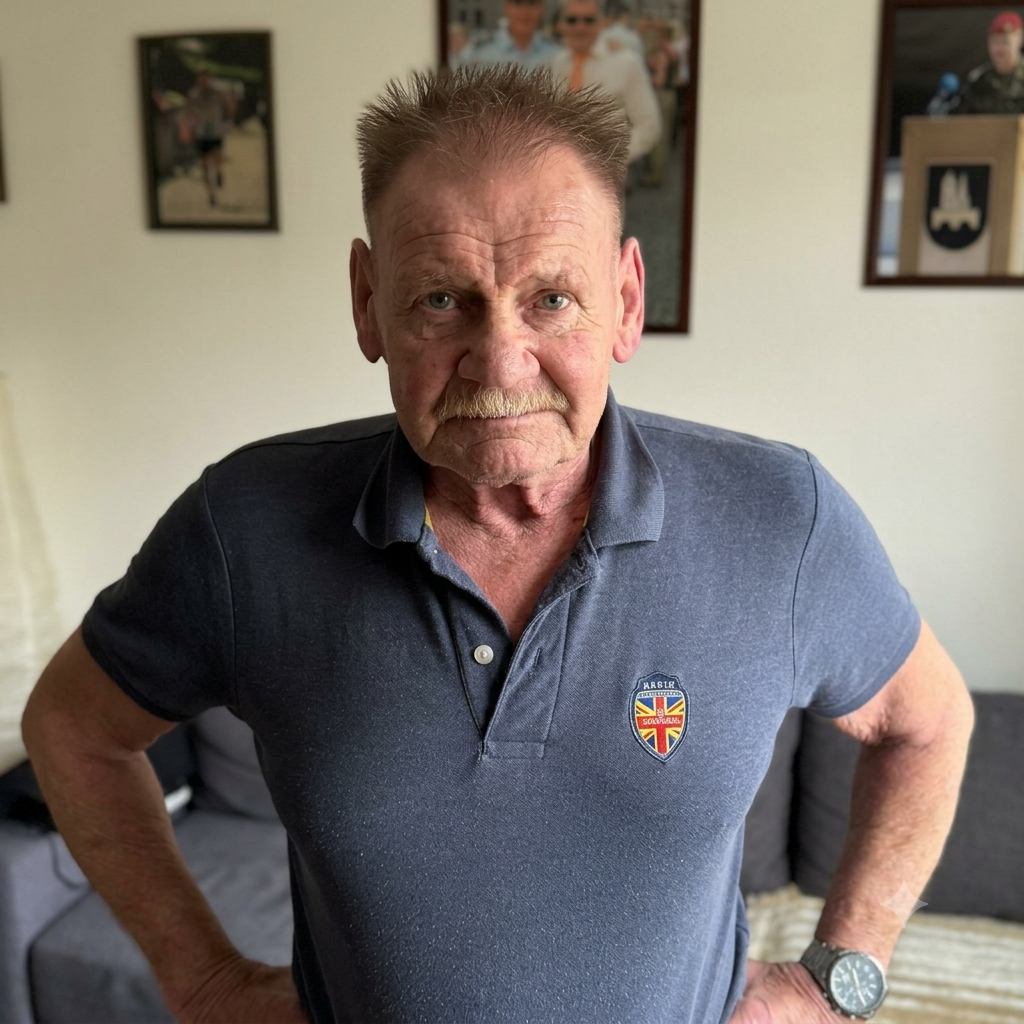
Bernd’s Story on Severe COPD/Emphysema
Procedure Details:
Age at Treatment: 65
Hospital: SRH Wald‑Klinikum Gera
Date of Procedure: 2025
My life before the treatment:
“I have always lead an active life.”
I have been physically active all my life: football, tennis, jogging, cycling. I have always been active and performance‑oriented — exercise had to be strenuous, otherwise it wasn’t exercise for me. But over time, I became increasingly short of breath.
I spent my entire working life with the Federal Police. It was my dream job, and I was very satisfied, even though the illness eventually brought me to desk duty. In my private life, I raised my son as a single parent. I had a good, fulfilling life.
COPD diagnosis – the gradual loss of breath
I was diagnosed with COPD in 2012 after I suddenly found it difficult to catch my breath. A full-blown attack. Severe shortness of breath, even just getting dressed. My family doctor immediately recognized what was going on: ‘You’ve landed yourself something nasty there, haven’t you?” An incurable disease that will get progressively worse. The only advice was to stop smoking, which would slow down the deterioration. I had never heard of COPD before and initially underestimated the diagnosis.
It did not lead to any major insight or prompt me to change my lifestyle. I continued to smoke — after all, I was already sick anyway. In the early phase, I hardly noticed any impact on my daily life and attributed much of it to getting older. It was not until 2019 that I had a severe exacerbation. My family doctor then referred me to a pulmonologist, who immediately sent me to rehabilitation in Münnerstadt.
That’s where I gave up smoking – from one day to the next. It was entirely a matter of mindset. I had been a heavy smoker for decades, but during my stay at the clinic it became clear to me that I couldn’t carry on like this. In retrospect, I should have quit much sooner.
After rehabilitation, I felt somewhat better, but overall my condition continued to deteriorate. I had regular check‑ups and took my medication, but my exercise tolerance continued to decline. During the COVID‑19 pandemic, I was strongly advised to stay at home. Due to the high risk, I took early retirement.
I increasingly adapted my life: fewer outings, fewer social activities. What was particularly painful for me was not being able to attend important family events — such as my grandson’s baptism — out of fear of being a burden to others. There were times when my lung function was under 25%. Everyday tasks such as climbing stairs or doing household chores became torturous; the constant shortness of breath dominated my life. I wasn’t offered any other treatment options and accepted the disease as inevitable.
“Do you want to go on living like this?” – A severe exacerbation opens up new therapeutic options
In May, while visiting my son in Gera, I experienced another severe exacerbation. My son immediately called the emergency physician — in retrospect, a stroke of luck. This is how I came to Waldklinikum Gera. I was initially stabilized with medication
It was there that I first learned about the option of endoscopic lung volume reduction with valves. After further examinations, I was deemed a suitable candidate for the procedure. I was already a non‑smoker but had to complete another rehabilitation program beforehand.
Because my condition was already so poor, the rehabilitation prior to the procedure was quite a strain. But shortly thereafter, the long‑awaited call came: I was deemed eligible for valve treatment — with an appointment scheduled for the following week. I was not scared; on the contrary, I saw it as my last real chance.
The treatment
The procedure — a noticeable change
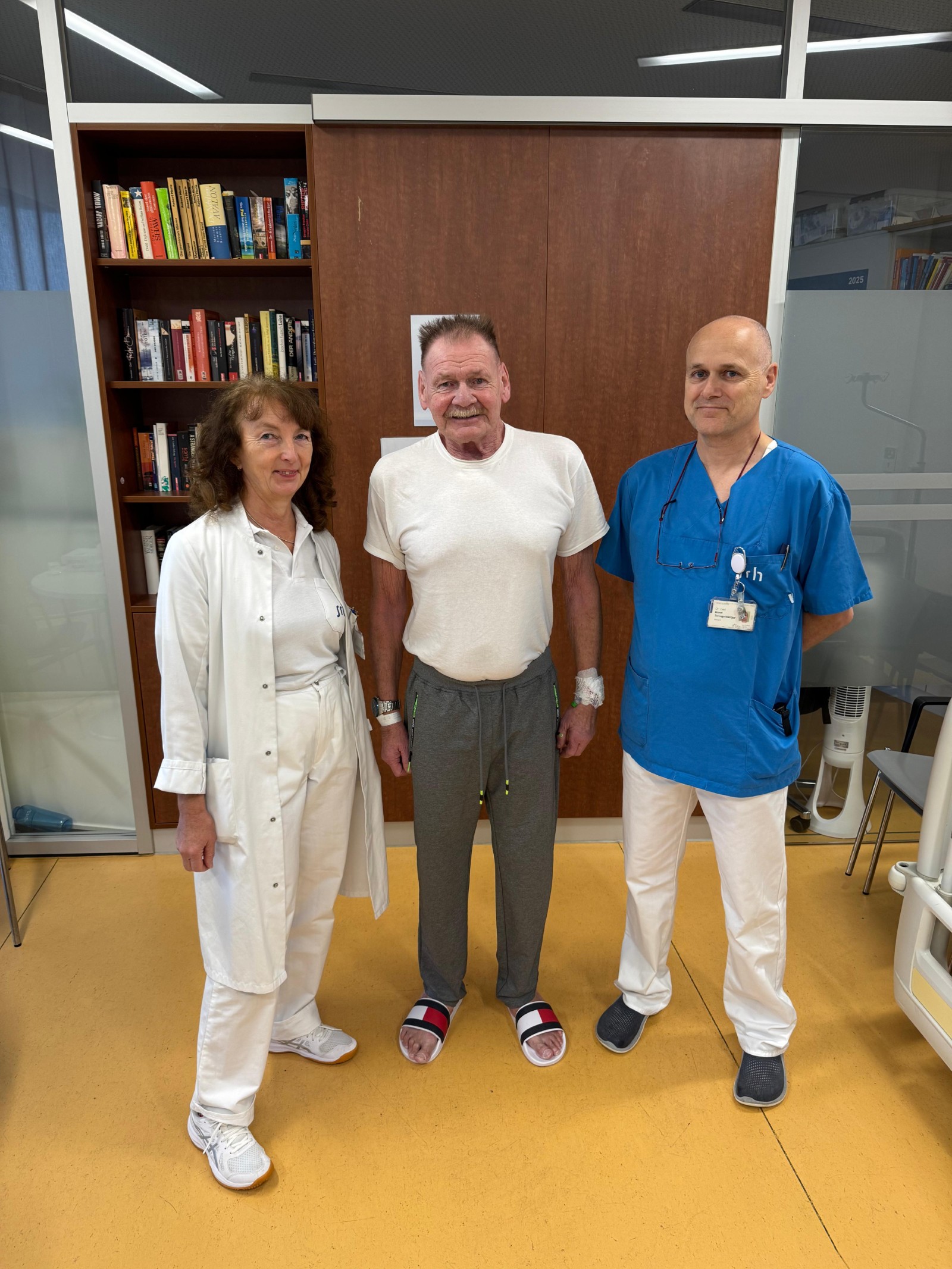
The procedure was completed without complications. I could feel the weight lift from my chest as soon as I woke up— it was truly liberating. For the first time in years, I felt as though I could breathe again. I was so enthusiastic that the doctors themselves had to rein me in.
The effect was clear. In the 6‑minute walk test, I improved from approximately 160 m to nearly 500 m. I can now once again run up the three steps that used to take me five minutes. I can go about my daily activities again, even if I need to take breaks. Now, after the procedure, I would find rehab useful. Of course, I continue to take my medication. And once a year I go to the hospital for check-ups.
I am aware, that I am not a healthy person. The valves haven’t given me a new pair of lungs. But on a scale of 0 to 10, I have gone from almost 0 to about 4 or 5 – and that’s made an enormous difference to my quality of life.
My life after the treatment
It was a complete success – a new lease of life
I still use a mobile oxygen device when I need it and as a back-up, especially if I am out and about or exert myself. It’s also a mental crutch. Some things are still difficult, like showering or cooking because of the steam. But I’m still more independent and more active once again.
I’ve started taking back control of my life: I go to football again, I find it easier to manage my household chores and can continue to work on an hourly basis in the town hall. Sometimes I also walk up the two floors in the house — for training and because I can do it again. Without the procedure, I would likely have spent my life on the couch, just vegetating.
My family is especially important to me. My son had been very worried about me and is now immensely relieved to see me more stable again. My grandson gives me added motivation to stay active — even though I can’t join in with everything physically.
I would never have believed that I would ever be in this condition again. A point at which life once again feels genuinely enjoyable. If it remains at this level for a few more years, I would be very grateful.
Nobody really knows about this: education as a personal mission
I now tell everyone about valve therapy — patients as well as doctors. A surprisingly large number of people are unaware of it. Even worse, some doctors advise against it with no good reasons. I have had this experience both in rehabilitation and with registered doctors. I consider this a major problem and am glad that I did not let it discourage me.
The most important advice I can give others remains: quit smoking!
Without this, further therapies such as volume‑reduction treatment are not possible. Ask questions and find out what other therapy options are out there — I, too, was unaware of them for a long time. And: you have to accept the disease, stay active, and make use of opportunities when they arise.
Findings from case studies are not necessarily predictive of outcomes in other cases. Outcomes in other cases may vary.
Complications of the Zephyr Endobronchial Valve treatment can include but are not limited to pneumothorax, worsening of COPD symptoms, hemoptysis, pneumonia, dyspnea and, in rare cases, death.
The Zephyr® Endobronchial Valve is an implantable bronchial valve intended to control airflow in order to improve lung functions in patients with hyperinflation associated with severe emphysema with little to no collateral ventilation, and/or to reduce air leaks. The Zephyr Valve is contraindicated for: Patients for whom bronchoscopic procedures are contraindicated; Evidence of active pulmonary infection; Patients with known allergies to Nitinol (nickel-titanium) or its constituent metals (nickel or titanium); Patients with known allergies to silicone; Patients who have not quit smoking. Use is restricted to a trained physician. Prior to use, please reference the Zephyr Endobronchial System Instructions for more information on indications, contraindications, warnings, all precautions, and adverse events.
The results of case studies do not necessarily allow conclusions to be drawn in other cases. Results in other cases can be different. Possible complications associated with the endobronchial valve treatment include: Pneumothorax, deterioration of the COPD symptoms, pneumonia, dyspnea and in rare cases death. The Zephyr® Endobronchial Valve is an implantable bronchial valve intended to control airflow in order to improve lung functions in patients with hyperinflation associated with severe emphysema and/or to reduce air leaks. The Zephyr Valve is contraindicated for: Patients for whom bronchoscopic procedures are contraindicated; Evidence of active pulmonary infection; Patients with known allergies to Nitinol (nickel-titanium) or its constituent metals (nickel or titanium); Patients with known allergies to silicone; Patients who have not quit smoking. Use is restricted to a trained physician. Prior to use, please reference the Zephyr Endobronchial System Instructions for more information on indications, contraindications, warnings, all precautions, and adverse events.
©2026 Pulmonx Corporation or its affiliates. All rights reserved.
EMEA-EN-2956-v1